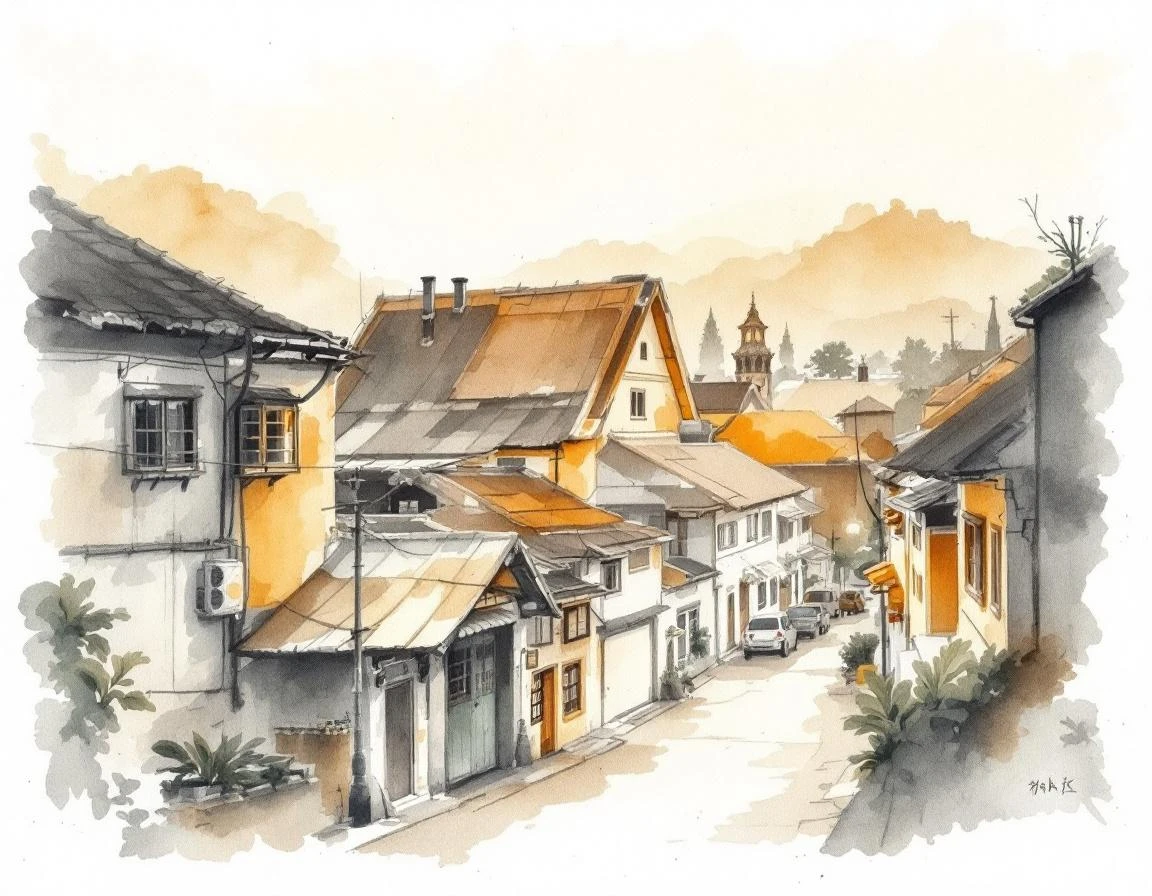
Island Asian Town and City Naming Traditions
Coastal settlements across Indonesia, the Philippines, Taiwan, Singapore, Sri Lanka, and the smaller archipelagos took their names from wherever people actually lived: the harbor, the river mouth, the market beach. Maritime life shaped the vocabulary before colonizers arrived to layer Portuguese, Spanish, Dutch, and English names on top. Some of those colonial names stuck; many were replaced after independence with older indigenous forms or newly coined ones.
Indonesian Archipelagic Patterns
Indonesia's urban toponyms span more than 17,000 islands and hundreds of distinct ethno-linguistic groups. Javanese city names tend to draw on traditional power centers - *kraton* (palace) and *negara* (state) - or on directional concepts embedded in pre-colonial cosmology. Balinese towns more often take their names from temples or sacred sites. Coastal settlements across the archipelago carry maritime prefixes: *pulau* (island), *teluk* (bay), *tanjung* (cape). Dutch colonial administration introduced compound names and new administrative designations, many of which were Indonesianized after independence. Islamic influence shows up in names incorporating *masjid* (mosque), *medan* (square or field), or the titles of Muslim rulers. Planned developments from the late twentieth century onward sometimes received promised names tied to development programs or national unity slogans. The result is a toponymic record that reflects, in compressed form, the full sweep of Indonesia's cultural and linguistic history.
Philippine Naming Complexities
Philippine urban names carry the archipelago's colonial history in layers. Spanish administrators named settlements after saints - San Isidro, Santa Cruz, Santo Tomas - particularly towns founded around mission churches. Before the Spanish arrived, settlements took their names from geography, local flora and fauna, or founding families; many of those original names survive today in barangay designations even when the larger municipality was renamed. American administration added English elements and imposed the standardized categories still in use: City, Municipality, Province. Indigenous naming patterns vary sharply by region - Tagalog, Cebuano, and Ilocano areas each developed distinct conventions that persist alongside the colonial layers. More recent names honor national heroes or invoke promised concepts, which means a single map of the Philippines can read as a compressed record of four centuries of outside influence and local resistance to it.
Island Commercial Centers
Several major Asian island cities grew as commercial entrepôts, and their names carry that history. Singapore derives from Sanskrit - *singa* (lion) and *pura* (city) - though its modern identity took shape under British colonial administration as a regional trade hub. Hong Kong, now a Special Administrative Region of China, translates roughly as "fragrant harbor," a name that points directly to its maritime origins. Taiwanese cities like Taipei layer Chinese naming conventions over Japanese colonial-era administration and postwar development, producing something neither purely one nor the other. Throughout island Asia, colonial port cities often bear names that announce their function outright - Port, Harbor - or commemorate the administrators who built them. Many of these names were modified or replaced after independence, the renaming itself a kind of second founding. What distinguishes this whole class of urban names is their emphasis on maritime connectivity: where continental naming traditions tend toward agricultural or administrative reference, island city names orient themselves toward the sea.
Spiritual and Cultural References
Many island Asian urban names draw on spiritual or cultural references tied to local traditions rather than administrative convenience. Sri Lankan cities often echo Buddhist concepts or historical kingdoms - Anuradhapura and Kandy (Kanda Uda Rata) being the clearest examples. Balinese towns frequently incorporate temple references or the directional concepts central to Hindu-Balinese cosmology. Islamic influence runs through urban naming across Indonesia, the southern Philippines, and other regions with significant Muslim populations, surfacing as Arabic loanwords or references to particular mosques and scholars. Indigenous spiritual traditions left their mark too: sacred natural features, mythological events, local deities. Many of these survive as neighborhood or district names even when the main settlement carries a colonial or administrative label on official maps.
Island Asian Town and City Names: A Working Naming Guide
Island Asian town and city names should feel used, not arranged. Start with the ground: volcanic islands, coral ports, fishing villages, spice harbors, ferry towns, reef passages, and typhoon coasts. Then decide what sort of place is being named, because an island port, fishing town, plantation village, ferry capital, volcanic ridge town, or lagoon village asks for a different kind of word than a capital or a ruin. The generator can give you a quick spread, but the choice still has to sound like someone could say it while giving directions, filing a complaint, selling grain, dodging patrols, or pointing at a storm line. Keep a few candidates that disagree with each other. One may sound plain; another may feel like a mapmaker cleaned it up too much. That friction is useful.
Who Gets to Name the Place
Pick the naming authority before you fall in love with the syllables. Locals keep names in ways officials rarely predict. A tax office wants tidy spelling. A sailor wants speed. A priest, elder, port clerk, surveyor, rebel, colonial official, or company lawyer may all have a reason to push a different version. For Island Asian town and city names, the useful candidate usually reveals who got to write the sign and who kept saying the older word anyway. Read the name in a sentence of dialogue. If every character would pronounce it the same way, the place may be too clean.
Language Care Before Style
Island naming changes by chain. Malay, Javanese, Balinese, Tagalog, Cebuano, Sinhala, Tamil, Hokkien, Japanese, Dutch, Spanish, British, and mission layers should not be stirred together. This is where many generated names go wrong. They borrow surface sound while ignoring who owns the language, whether the place is real, and what history the word may touch. Fiction gives you room to invent, but it does not make every source available for casual decoration. If you need a real cultural reference, narrow it to a specific region and period. If you are making a secondary world, decide what parts of the naming logic you are adapting and what parts you are leaving alone.
The Work Inside the Name
The town needs work inside it. Maybe people came for a ferry, a mine, a shrine, pasture, a school, a harbor, a wall, or a road that cut through older country. Maybe they stayed because leaving cost too much. Let that practical reason roughen the name. A good result can hold an official story and a private one at the same time: the polished name on the station board, the clipped version in a market, the older name used at home, the insult outsiders keep repeating. That layered feel matters more than a rare letter combination.
The Scene Test
Before keeping a result, run it through a small scene. Put it on a typhoon warning, in a grandmother's warning, on a ferry ticket, and in the mouth of someone who wants the place forgotten. For Island Asian town and city names, the winner should make one concrete promise about geography, class, danger, faith, trade, or memory. It should also leave room for a writer to disagree with it later. Town names age. They get translated badly, painted over, shortened by children, revived by activists, sold by developers, or cursed by people who left. Choose the one that can survive that kind of handling.