Plot Generator for Shaping a Story That Actually Moves
A plot is not a chain of events. It is the pressure system that makes those events matter. A character wants something, something resists them, the resistance changes shape, and each choice makes the next choice harder. Writers often get stuck because they have pieces: a setting, a person, a premise, a striking ending. The hard part is finding the sequence that turns those pieces into a story with momentum. This plot generator is built for that stage. It gives you a structured way to test openings, conflicts, reversals, midpoint turns, climaxes, and endings without handing over the story itself. The output should feel like scaffolding, not finished prose. You bring the voice, the moral pressure, the private logic of the characters, and the details only you can know. The generator gives you something concrete enough to accept, resist, or tear apart for parts.
Starting With the Real Source of Conflict
A useful plot begins with a conflict that cannot be solved by one honest conversation or one lucky discovery. Ask what the protagonist wants, why they want it now, and what makes the want dangerous. The obstacle may be a person, a system, a secret, a physical limit, or a belief the character refuses to examine. The stronger plots usually combine an outer obstacle with an inner one. A detective must solve the case while hiding a conflict of interest. A daughter must save the family business while admitting she never wanted it. A soldier must survive a mission while realizing obedience is the problem. When you use the generator, feed it the contradiction inside the premise. If you only enter a setting and a role, the result may be serviceable but thin. If you enter a want, a fear, and a consequence, the tool can build pressure around choices instead of arranging events in a row.
Turning a Premise Into Beats
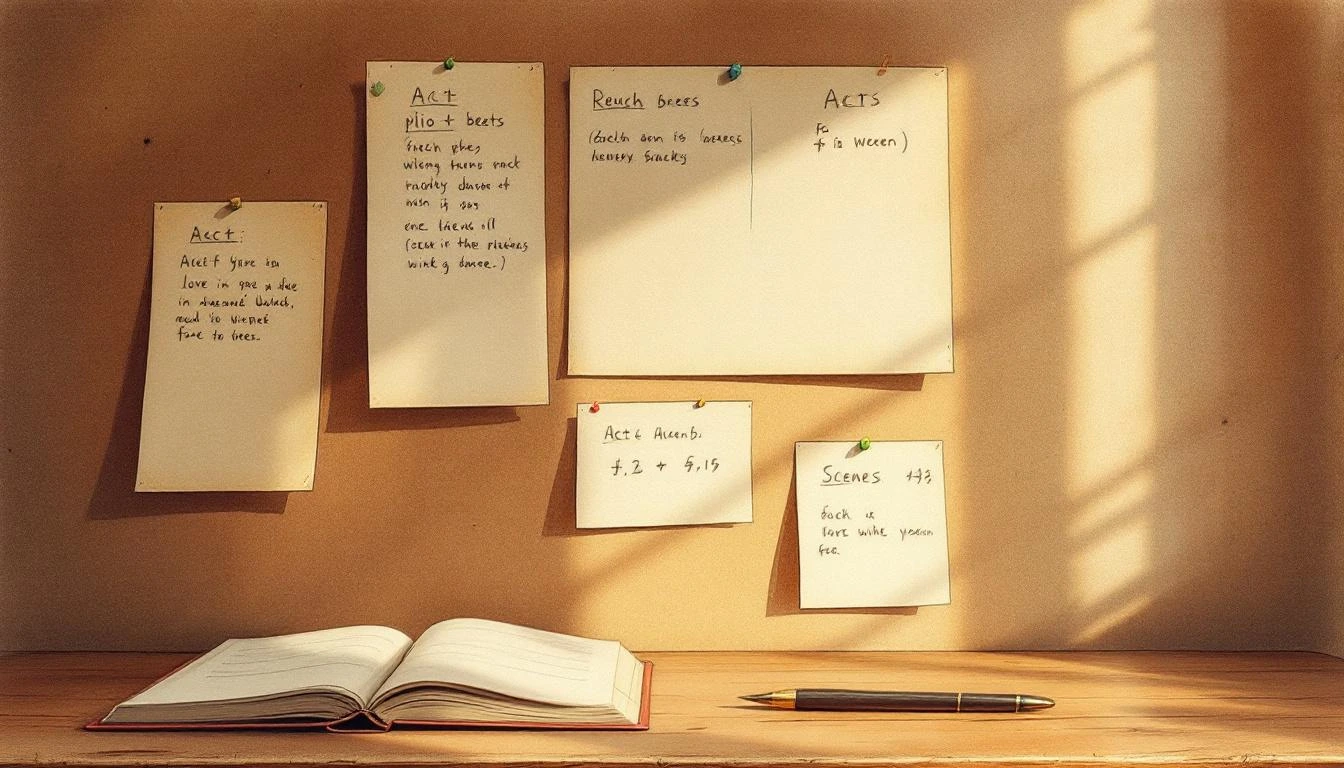
Story beats are not boxes to tick. They are changes in the state of the story. Something is true after the beat that was not true before it. The protagonist learns the wrong lesson, loses a safe option, misreads an ally, or commits to a path they cannot easily leave. That change is what gives a plot its forward pull. A generator can help you sketch those shifts. It may suggest an inciting incident, an escalation, a false victory, a late betrayal, or a final choice. The useful question is not whether the beat sounds dramatic. The useful question is whether it changes what the protagonist can do next. If a suggested scene could be removed without altering the outcome, it is probably decoration. Keep the beats that narrow the road, reveal character, or make the ending harder to earn.
Choosing a Structure Without Becoming Formulaic
Three-act structure, five-act structure, hero's journey, mystery clock, romance arc, quest, descent, return: these are names for patterns writers have used because they solve real problems. Structure helps readers feel orientation. It tells them when the story is widening, when it is tightening, and when the bill for earlier choices is coming due. The danger is not structure itself. The danger is using structure as a substitute for attention. Let the generator offer a frame, then test it against the material. A grief story may need a spiral rather than a clean escalation. A mystery may need two clocks, one public and one private. A fantasy quest may become more interesting if the destination is reached early and the second half deals with the cost of arrival. Structure should clarify the story you are writing, not flatten it into the nearest familiar outline.
Making the Middle Carry Weight
The middle is where many plots soften. The opening has novelty, the ending has promise, and the middle becomes a corridor between them. To avoid that, every middle sequence needs pressure that changes the situation. Complications should do more than delay success. They should expose a flaw in the protagonist's plan, alter a relationship, reveal a false assumption, or force a choice that cannot be neatly undone. Use the generator to look for pivots. A midpoint can be a discovery, a reversal, a public failure, a private confession, or the moment the protagonist gets what they wanted and realizes it does not solve the real problem. The shape matters less than the consequence. If the middle beat deepens the cost of continuing, it is doing its job. If it only adds another obstacle of the same kind, the plot may need a sharper turn.
Building Endings That Feel Earned
An ending works when it answers the story's central pressure honestly. That does not mean every question is closed or every character is rewarded. It means the final choice, loss, victory, or refusal grows from what the story has taught us to expect. The protagonist should arrive at the ending changed enough to make a choice they could not have made at the start, or unchanged in a way the story has made costly. Generated endings are best treated as stress tests. If an ending feels too easy, ask what price has been avoided. If it feels bleak without purpose, ask what the story is actually judging. If it surprises you but fits the earlier material, keep examining it. A good plot does not simply reach an ending. It makes the ending feel like the only honest place the story could have gone, even if the route there kept changing.
Reading Generated Outlines as Questions
The most useful generated outline is not the one you follow exactly. It is the one that asks better questions than the blank page did. Why would this character hide the truth here? What would make the ally betray them? Which scene proves the old plan cannot work? Treat each suggested beat as a question about cause, cost, and consequence. This keeps the writer in charge. If the generator suggests a betrayal and your story needs loyalty, keep the pressure and change the action. If it suggests a chase and your story needs stillness, keep the deadline and turn it into a conversation that cannot be delayed. The outline becomes a tool for thinking, not a verdict. That distinction matters. The moment a beat feels wrong, ask what useful pressure it was trying to create before you throw it away.