Northeast American Town Names - Places from New England to the Mid-Atlantic
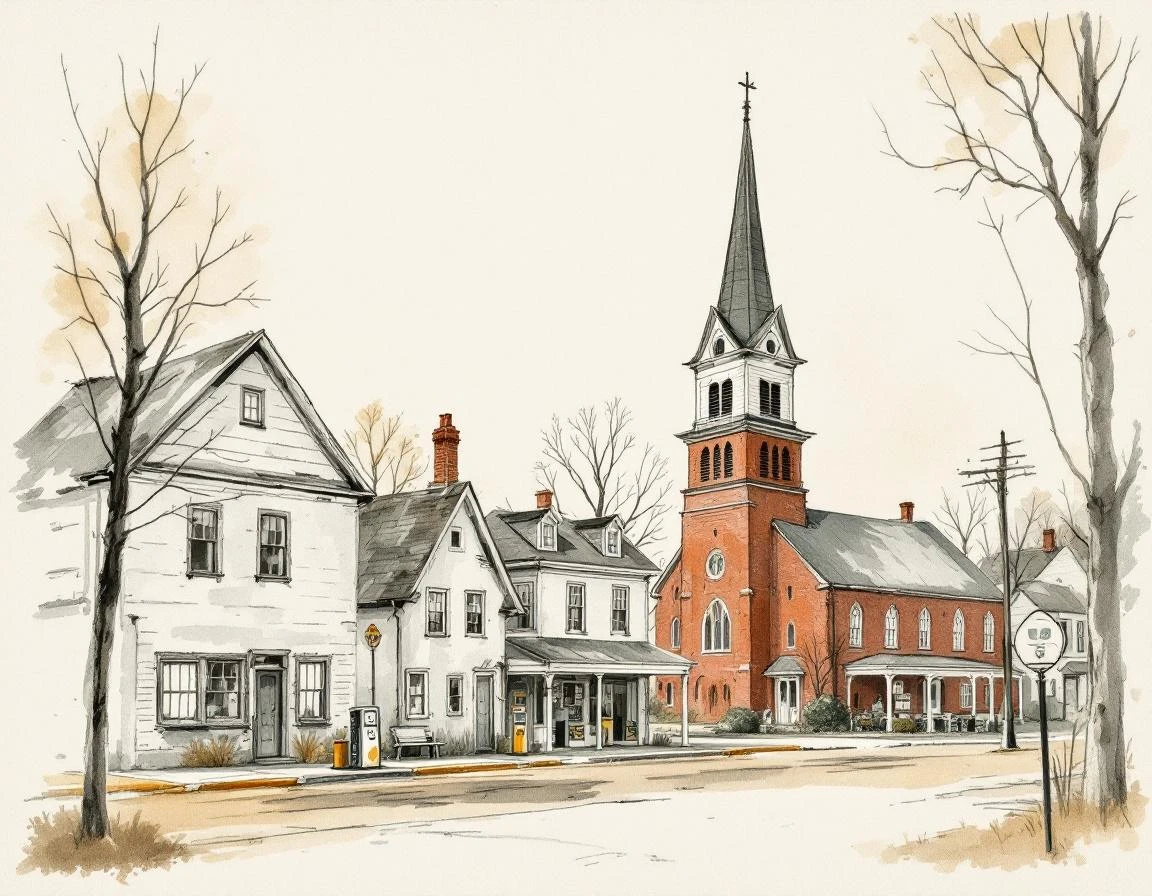
Generate Northeast American town names drawn from Puritan settlement, colonial port cities, industrial mill towns, and the oldest continuous European-American settlements on the continent. The region's naming conventions layer three centuries of collision and compromise. English Puritan settlers transplanted county and parish names from East Anglia and the West Country - Springfield, Exeter, Hartford - while simultaneously transliterating or outright mangling Algonquian place-names: Housatonic, Narragansett, Merrimack. Dutch influence persists up the Hudson Valley in names like Kinderhook and Schenectady. French Huguenot settlement left traces in New Paltz. The Quaker counties of Pennsylvania carry a different register entirely, quieter and more plainspoken: Bucks, Chester, Lancaster. Mill towns followed water. Lowell, Lawrence, Woonsocket, Pawtucket - these names attach to falls and rapids, places where a river dropped fast enough to drive a loom. They tend toward the blunt and geographical. Contrast them with the promised names of the Puritan founders, who named towns after heavenly virtues or English market towns they hoped to replicate or surpass. Use this generator when you need a town that feels genuinely old, freighted with a specific kind of American Protestant civic history, or when your story needs the texture of a place where the Congregationalist church still anchors the green and the mill has been a ruin for a hundred years.
New England Naming
New England naming draws more scholarly attention than any other region in American place name research, largely because it holds the oldest layer of English settlement on the continent and the most concentrated use of specific naming conventions. The Puritan settlers transplanted English county and town names wholesale: *Boston* (from Lincolnshire), *Cambridge* (from Cambridgeshire), *Plymouth* (from Devon), *Hartford* (from Hertfordshire), *Ipswich* (from Suffolk). The intent was both nostalgic and political - the new settlements proclaimed their relationship to the English places they came from, while simultaneously establishing independent communities. Wampanoag, Abenaki, Narragansett, and Mohegan place names survive in corrupted forms throughout New England: *Massachusetts* (*Massachusett*, a tribe name, possibly "near the great hill"), *Connecticut* (*Quinnehtukqut*, "beside the long tidal river"), *Merrimack* (*malonmake*, "swift water" in Pennacook), *Passumpsic*, *Quinebaug*, *Assabet*. The Indigenous names of rivers tended to stick because rivers were the practical navigational reference for everyone moving through the land. Puritan theology also shaped the map directly. Biblical town names cluster densely in New England: *Canaan*, *Sharon*, *Bethlehem*, *Goshen*, *New Canaan* - settlers reading their landscape as the promised land and naming it accordingly. The concentration in Connecticut and New York is dense enough that the region has been called "the promised land" in American place name studies.
Colonial Port Cities
The colonial-era port cities of the Northeast - Boston, New York, Philadelphia, Baltimore - were entry points for both people and goods, and their naming reflects specific choices made by whoever held power at the time. New York (*Nieuw Amsterdam* to the Dutch, who controlled it 1626-1664, then renamed by the English for the Duke of York after the conquest) has the most transparent naming history: a city renamed for the conquering power's patron. Philadelphia (*Philadélphia* - "brotherly love" from Greek, named by William Penn for the ideal of the city) belongs to a different tradition. Penn's colony naming generally reached for the idealized: Pennsylvania itself, counties named for English counties and persons, the "city of brotherly love" as a programmatic statement about what Penn intended the place to become. Whether it achieved this is a different question. The industrial mill towns of New England and the Mid-Atlantic have names that are entirely ordinary - personal names, place names - applied to settlements explicitly designed as industrial experiments. Lowell, Massachusetts was a planned textile city, named for the industrialist Francis Cabot Lowell. Paterson, New Jersey, the first planned industrial city in America, was designed by Alexander Hamilton. Lawrence, Massachusetts follows the same pattern: an unremarkable surname attached to a town built around a specific economic ambition.
Using the Generator
For colonial American settings - the Massachusetts Bay Colony, Puritan townships, the witch trial geography (Salem, Massachusetts; *Shalem* in Algonquian, "peace"), the revolutionary-era ports - names should draw from the specific colonial tradition of the region. For early republic settings, the Constitutional Convention's Philadelphia or the Federal period in New York and Washington, naming follows the specific historical geography of the young United States. For contemporary Northeast settings - the post-industrial mill towns reinventing themselves, Boston's academic cluster, the New York meta-narrative, the Mid-Atlantic corridor - naming reflects the region's particular contemporary character.
Northeast American Town Names: A Working Naming Guide
Northeast American town names should feel used, not arranged. Start with the ground: colonial harbors, mill rivers, Appalachian gaps, town greens, universities, and rocky fishing villages. Then decide what sort of place is being named, because a Puritan town, mill city, fishing port, college borough, canal town, or mountain village asks for a different kind of word than a capital or a ruin. The generator can give you a quick spread, but the choice still has to sound like someone could say it while giving directions, filing a complaint, selling grain, dodging patrols, or pointing at a storm line. Keep a few candidates that disagree with each other. One may sound local before it is pretty; another may feel like a mapmaker cleaned it up too much. That friction is useful.
Who Gets to Name the Place
Pick the naming authority before you fall in love with the syllables. Local speech mispronounces and preserves names in ways officials rarely predict. A tax office wants tidy spelling. A sailor wants speed. A minister, mill owner, town clerk, surveyor, developer, or college trustee may all have a reason to push a different version. For Northeast American town names, the useful candidate usually reveals who got to write the sign and who kept saying the older word anyway. Read the name in a sentence of dialogue. If every character would pronounce it the same way, the place may be too clean.
Language Care Before Style
Algonquian, Dutch, English, Irish, Italian, French Canadian, and later civic layers all leave marks. Age matters here. This is where many generated names go wrong. They borrow surface sound while ignoring who owns the language, whether the place is real, and what history the word may touch. Fiction gives you room to invent, but it does not make every source available for casual decoration. If you need a real cultural reference, narrow it to a specific region and period. If you are making a secondary world, decide what parts of the naming logic you are adapting and what parts you are leaving alone.
The Work Inside the Name
The town needs work inside it. Maybe people came for a ferry, a mine, a shrine, pasture, a school, a harbor, a wall, or a road that cut through older country. Maybe they stayed because leaving cost too much. Let that practical reason roughen the name. A good result can hold an official story and a private one at the same time: the polished name on the station board, the clipped version in a market, the older name used at home, the insult outsiders keep repeating. That layered feel matters more than a rare letter combination.
The Scene Test
Before keeping a result, run it through a small scene. Put it on a weather report, in a grandmother's warning, on a ferry schedule, and in the mouth of someone who wants the place forgotten. For Northeast American town names, the winner should make one concrete promise about geography, class, danger, faith, trade, or memory. It should also leave room for a writer to disagree with it later. Town names age. They get translated badly, painted over, shortened by children, revived by activists, sold by developers, or cursed by people who left. Choose the one that can survive that kind of handling.